

When Can Scars Be Tattooed Safely? Expert Timing
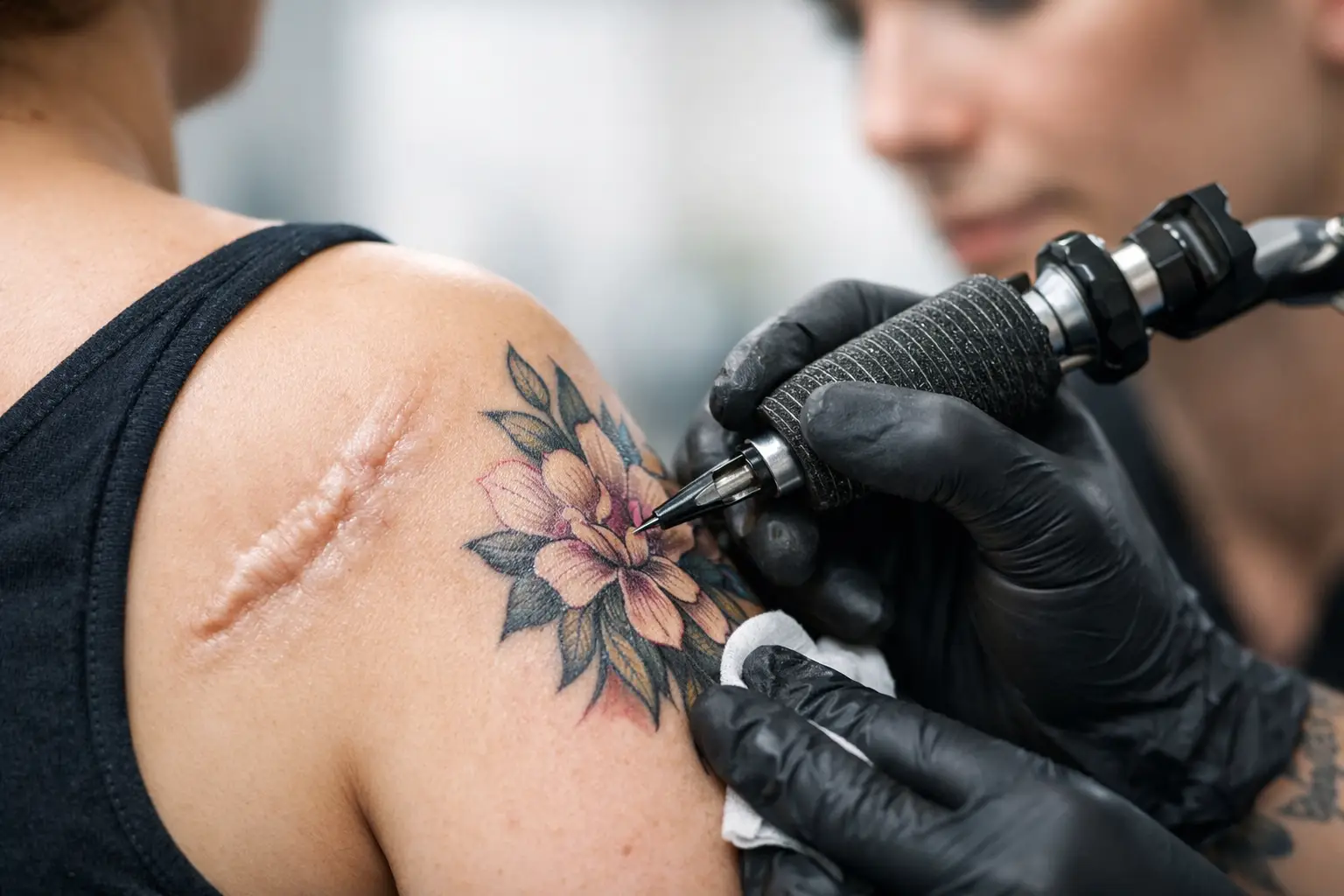
A scar may look healed long before it is ready for a needle. For anyone asking when can scars be tattooed safely, the answer is not a fixed date on the calendar. Safe scar camouflage depends on how the tissue has matured, how it behaves under assessment, its medical history, and the treatment goal.
At Ink Illusions, scar revision is approached as a specialist skin-restoration treatment, not a standard tattoo appointment. The aim is to reduce the visual contrast between scar tissue and the surrounding skin while respecting the scar’s structure, sensitivity and capacity to heal.
When can scars be tattooed safely after surgery or injury?
In most cases, a scar should be fully healed and mature before camouflage tattooing is considered. A minimum of 12 months is commonly advised after surgery, injury or trauma. Some scars need 18 months or longer, particularly after major surgery, burns, skin grafts, complex wounds or complications during healing.
The reason is biological. During the early months, collagen is still reorganising and the scar may continue to flatten, soften, fade or tighten. Tattooing tissue that is still changing can lead to unpredictable pigment retention, unnecessary trauma and a result that no longer suits the skin once the scar develops further.
Time alone is not enough. A two-year-old scar that remains raised, red, itchy, painful or unstable may not be suitable. Equally, a scar that is just over a year old but pale, flat, supple and symptom-free may be ready for a specialist consultation. The condition of the tissue matters more than the date of the operation.
Signs a scar may be ready for camouflage tattooing
A suitably mature scar is usually closed, dry and free from scabbing. It should not be actively inflamed, tender, hot, weeping or prone to splitting. The colour often settles from red, pink or purple towards a lighter, more neutral tone, although this varies across skin tones and scar types.
Texture is equally significant. A scar that is soft and pliable generally responds more predictably than one that is thick, rope-like, hard or tethered to deeper tissue. During a professional assessment, the practitioner will consider whether the skin can tolerate controlled implantation of pigment and whether a realistic blend can be achieved.
The client’s own experience also matters. Persistent itching, pain, numbness, burning or recurrent swelling should be discussed before treatment. These symptoms do not automatically rule out tattooing, but they indicate that further healing, medical input or an alternative treatment plan may be required.
Why redness and raised tissue require caution
Redness can signal ongoing vascular activity within the scar. Introducing pigment too early may intensify irritation and make the result difficult to judge as the tissue continues to settle. Raised scars, including hypertrophic scars and keloids, need particular caution because any fresh skin trauma can encourage further overgrowth in people who are prone to it.
Keloid scarring is not a routine indication for scar camouflage tattooing. It can extend beyond the original wound and may react adversely to needling. A specialist practitioner should assess the history carefully, and medical clearance may be appropriate. In some cases, camouflage is not the right first step.
Scar type changes the treatment plan
There is no single protocol for every scar. Surgical scars from caesarean sections, breast surgery, tummy tucks, facelifts or orthopaedic procedures can often be considered once fully mature. However, each location has its own practical considerations. Areas subject to stretching, friction or regular sun exposure may heal and retain pigment differently.
Self-harm scars require an especially sensitive and individual approach. The scar tissue must be mature and stable, while the client must feel emotionally ready for the process. A consultation should be respectful, private and focused on the client’s goals rather than assumptions about their history.
Burn scars and skin grafts can be more complex. Their colour, thickness, sensation, circulation and elasticity may vary considerably across a small area. Some can benefit from advanced camouflage, while others require staged treatment or may be unsuitable for pigment implantation. A patch test and conservative first session can be valuable where tissue response is uncertain.
Scars following cancer surgery, reconstruction or areola procedures should only be treated once the surgical team has confirmed healing is complete and there are no treatment-related restrictions. This is particularly relevant after radiotherapy, chemotherapy or reconstructive surgery, as these can affect skin quality and healing capacity.
A medical and lifestyle check comes first
Safe treatment starts before the pigment is selected. A proper consultation reviews the cause and age of the scar, previous scar behaviour, medications, allergies, skin conditions and any relevant medical treatment. It should also identify contraindications such as active infection, uncontrolled diabetes, blood-clotting concerns, immune suppression or a current inflammatory skin flare.
Clients using isotretinoin, anticoagulants or certain topical treatments may need to delay treatment or seek advice from their prescribing clinician. Recent steroid injections into a scar can also affect tissue quality and should be declared. Pregnancy and breastfeeding policies vary by practitioner, but elective camouflage procedures are commonly postponed until a later stage.
Sun exposure deserves attention too. Tanned skin changes the baseline colour that camouflage pigment is designed to match. It is safer to assess skin in its usual, untanned state and avoid treatment on sunburnt or recently UV-exposed tissue. Matching the surrounding skin is a technical process, not a simple choice from a colour chart.
Why specialist scar tattooing is different
Camouflage tattooing uses carefully selected skin-tone pigments to reduce the contrast between a scar and surrounding skin. It does not erase the scar, restore normal skin texture or guarantee complete invisibility. The most successful outcomes make the area less immediately noticeable at a normal social distance, while preserving a natural-looking finish.
Scar tissue does not take pigment like healthy skin. It may retain colour unevenly, appear cooler or warmer once healed, or require multiple sessions to build coverage gently. That is why a practitioner’s knowledge of pigment behaviour, needle depth, skin tone and healed-result correction is essential.
A responsible treatment plan may include scar preparation before camouflage. Depending on the tissue, this can involve MCA inkless needling, radiofrequency microneedling or other skin-revision approaches intended to support texture and pliability. These treatments are not interchangeable, and they should never be used simply because a scar is visible. The method must suit the scar’s stage and condition.
Patch testing and staged sessions
Patch testing can help identify sensitivity to pigment and give useful information about healing response. It is particularly worthwhile for clients with a history of reactions, complex scarring or very reactive skin. A small test area is assessed after it has healed properly, rather than judged on the day of treatment.
Camouflage is often built in stages. The first session may focus on testing retention and creating a subtle base. Further sessions can refine colour, density and blending after the tissue has settled. Attempting to achieve full coverage in one aggressive treatment can compromise both healing and appearance.
Questions to ask before booking
A credible practitioner should be able to explain why your scar is, or is not, ready. They should ask about the procedure or injury that caused it, inspect the tissue directly, discuss expectations honestly and set out aftercare clearly. Before proceeding, make sure you understand the likely number of sessions, the possibility of pigment adjustment and the fact that results evolve during healing.
Be wary of anyone who promises to tattoo a fresh scar, guarantees that it will disappear, or treats every scar with the same pigment formula. Scar camouflage is highly individual. The safest result comes from measured technique, patience and an assessment-led plan.
The right time is when the skin is stable
The safest time to tattoo a scar is when it has completed its active healing phase, feels stable and has been assessed by a practitioner trained in paramedical tattooing. For many people that means waiting at least 12 months, but for others it means longer, additional skin preparation or a decision not to treat.
That patience protects both your skin and your result. A well-timed, expertly planned camouflage treatment can make a meaningful difference to how a scar is seen – and, more importantly, how confidently you feel in your own skin.

