

What Burn Scar Camouflage Treatment Can Achieve
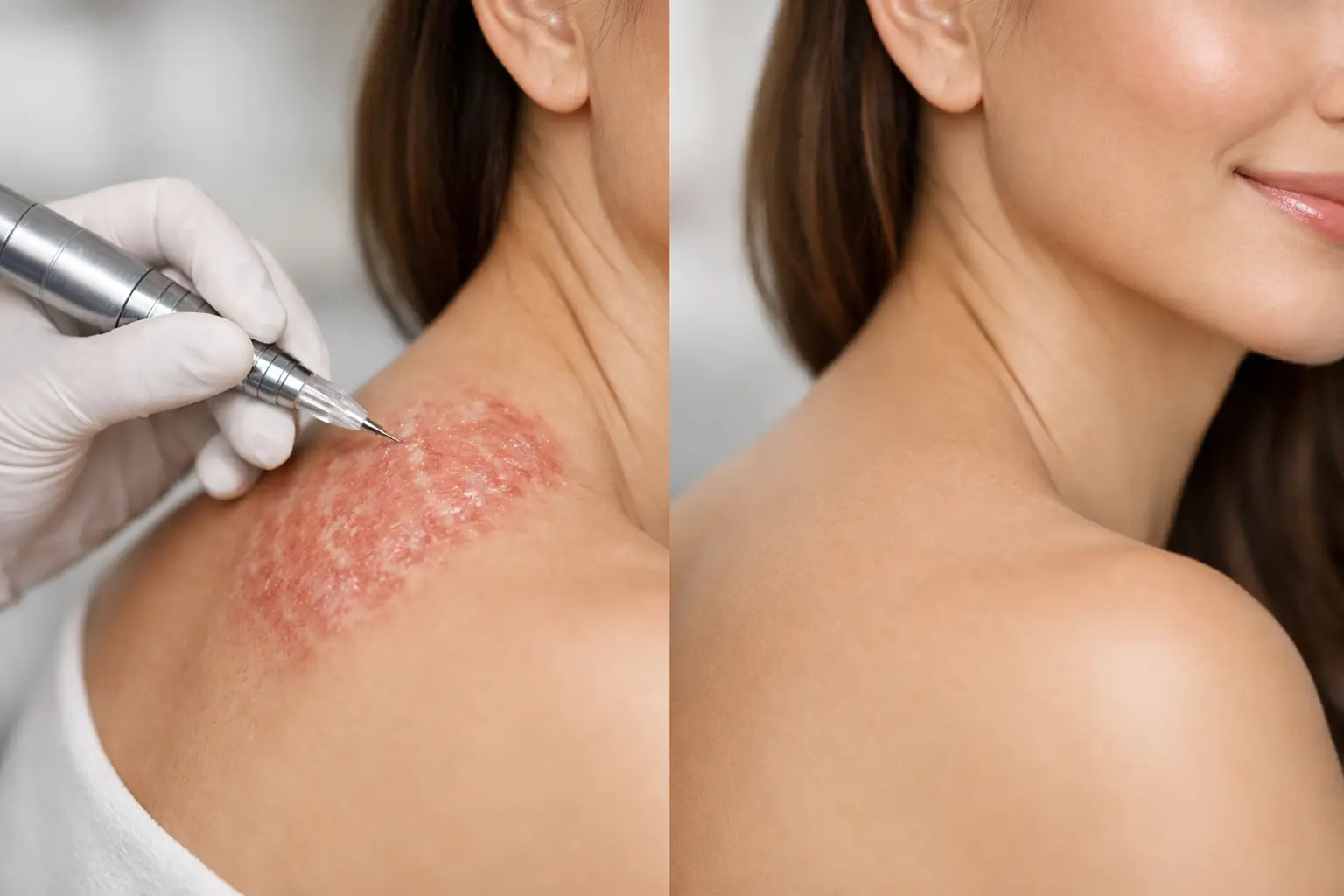
A burn scar can heal well medically and still feel impossible to ignore in the mirror. When the skin has settled but remains noticeably lighter, darker, redder or uneven in tone, burn scar camouflage treatment can reduce that contrast with carefully selected medical tattoo pigments. The aim is not to erase a scar or recreate untouched skin. It is to make the area less visually dominant, so attention is drawn back to the person rather than the injury.
For many clients, this is a confidence-restoring step taken years after the original trauma. It requires specialist assessment, technical colour knowledge and an honest understanding of what scar tissue can, and cannot, accept.
What is burn scar camouflage treatment?
Burn scar camouflage treatment is a form of paramedical tattooing. A trained practitioner deposits bespoke pigments into suitable, healed scar tissue to bring its visible colour closer to the surrounding skin. It is most often considered for scars that have healed pale or lost pigment, though selective colour correction may also help some scars with stable darker areas or uneven tone.
Unlike decorative tattooing, the work is based on optical blending. The practitioner studies the scar’s undertone, the client’s natural skin tone, the colour of the skin in different lighting and the way the scar reflects light. Pigments are then mixed to create a match that is convincing at a normal social distance, rather than an artificial block of flat colour.
The result is generally subtle by design. A successful treatment allows the scar to recede visually while retaining the natural variation found in real skin.
Why burn scars need a specialist approach
Burn scars vary enormously. A superficial burn may leave a relatively smooth patch of altered pigment, while a deeper injury can produce thickened, raised, tight, shiny or highly textured tissue. Skin grafts may have a different texture, pore pattern and colour to the surrounding area. These differences affect whether pigment camouflage is appropriate and how it should be performed.
Scar tissue does not behave like untouched skin. It may be less elastic, more sensitive, less sensitive, slower to retain pigment or prone to changing colour during healing. Some areas also have reduced blood supply or irregular thickness. Treating these variables as though they were standard tattoo skin risks poor colour retention, patchiness and an unnatural finish.
This is why a specialist consultation matters. At Ink Illusions, assessment is centred on scar maturity, skin integrity, texture, pigment stability and realistic visual potential before a treatment plan is considered. Camouflage is a precision service, not a one-size-fits-all pigment choice.
Mature, stable scars are the starting point
A scar should be fully healed, stable and no longer changing before cosmetic tattooing is attempted. For burns, this can take a considerable time. The exact timing depends on the depth of injury, the area treated, grafting, ongoing medical care and how the scar continues to remodel.
A practitioner will look for signs that the scar has settled: no open areas, no active inflammation, no recurrent blistering, no significant colour change and no recent thickening or tightening. If the scar remains red, reactive, raised or uncomfortable, a different stage of scar management may be more appropriate first.
Clients should also disclose any history of hypertrophic scarring or keloids, diabetes, immune conditions, skin disorders, medication affecting healing, recent isotretinoin use, pregnancy or breastfeeding, and any ongoing treatment from a burns or dermatology team. Where there is uncertainty, medical clearance may be needed.
What camouflage can realistically improve
The strongest candidates are often flat or relatively flat scars with a stable difference in colour, particularly pale or depigmented scars surrounded by healthy skin. Carefully layered pigment can reduce the contrast that makes the area stand out on the face, chest, arms, legs or other visible locations.
Camouflage can also improve the visual unity of a healed graft or patch of uneven pigmentation. It may help a client feel more comfortable in short sleeves, swimwear, photographs or close personal settings. Those outcomes are meaningful, even when the texture of the scar remains visible.
There are clear limits. Pigment does not flatten a raised scar, release contracture, restore hair follicles, rebuild pores or remove shine. It cannot guarantee an exact match in every lighting condition, and skin tone can change with sun exposure, tanning, hormones and ageing while the implanted pigment remains comparatively stable.
A scar that is highly textured may still benefit from treatment, but the result is usually one of reduced colour contrast rather than invisibility. The most credible promise is improvement, not perfection.
How the treatment process is planned
A high-standard treatment begins well before the needle is used. Consultation includes a close examination of the scar and adjacent skin, medical and healing history, photographs and a discussion of what the client would consider a worthwhile outcome. This is also the point to identify whether camouflage tattooing, scar revision work, inkless needling, radiofrequency microneedling or no treatment is the most sensible route.
Colour matching is more complex than it appears
Skin is not one colour. It contains undertones, surface warmth, natural flushing, freckles, veins and areas of lighter or deeper pigmentation. A pigment that looks right while wet can heal differently once it settles into scar tissue. For that reason, custom blending is essential.
A patch test may be recommended, particularly where the scar has an uncertain healing history or the desired correction is substantial. It allows the practitioner to assess how the tissue accepts pigment and how the selected shade heals. This measured approach can prevent overcorrection and guide the final pigment formula.
During treatment, pigment is placed gradually in fine layers. The practitioner works conservatively, allowing the skin to respond rather than forcing saturation into fragile tissue. Depending on the size and complexity of the area, appointments may be spaced over several sessions, with healing time between each one.
Healing and aftercare influence the finish
Immediately after treatment, the area may look stronger, warmer or more obvious than the settled result. As the skin heals, some pigment is naturally lost and the colour softens. Scar tissue can be unpredictable, so a review and further session are common parts of the process rather than a sign that treatment has failed.
Aftercare normally focuses on keeping the area clean, avoiding picking or friction, limiting excessive sweating and protecting the skin from sun exposure while it heals. UV exposure can darken the surrounding skin, change the contrast and affect the long-term appearance of camouflage work. Following the practitioner’s individual aftercare instructions is essential.
Choosing the right practitioner for burn scar camouflage treatment
A beautiful result depends on more than owning a tattoo machine or matching pigment to a client’s wrist. Look for a practitioner with dedicated paramedical tattooing experience, clear healed examples across different skin tones and a consultation process that includes suitability screening. They should be comfortable explaining when treatment is not advisable.
It is also reasonable to ask about pigment quality, patch testing, infection-control standards, aftercare, likely session numbers and how they manage colour changes after healing. A responsible specialist will discuss limitations openly, especially with grafted, raised, highly sensitive or unstable scars.
For practitioners seeking to offer this service, formal training in scar assessment, pigment theory, needle depth, contraindications and client communication is fundamental. Burn scar work carries a greater responsibility than conventional cosmetic tattooing because every treatment decision affects tissue that has already experienced trauma.
The right treatment does not ask a burn scar to disappear. It respects the healing that has already taken place, then uses skilled colour work to make the scar feel less defining in everyday life.

