

How Does Scar Revision Tattooing Work Safely?
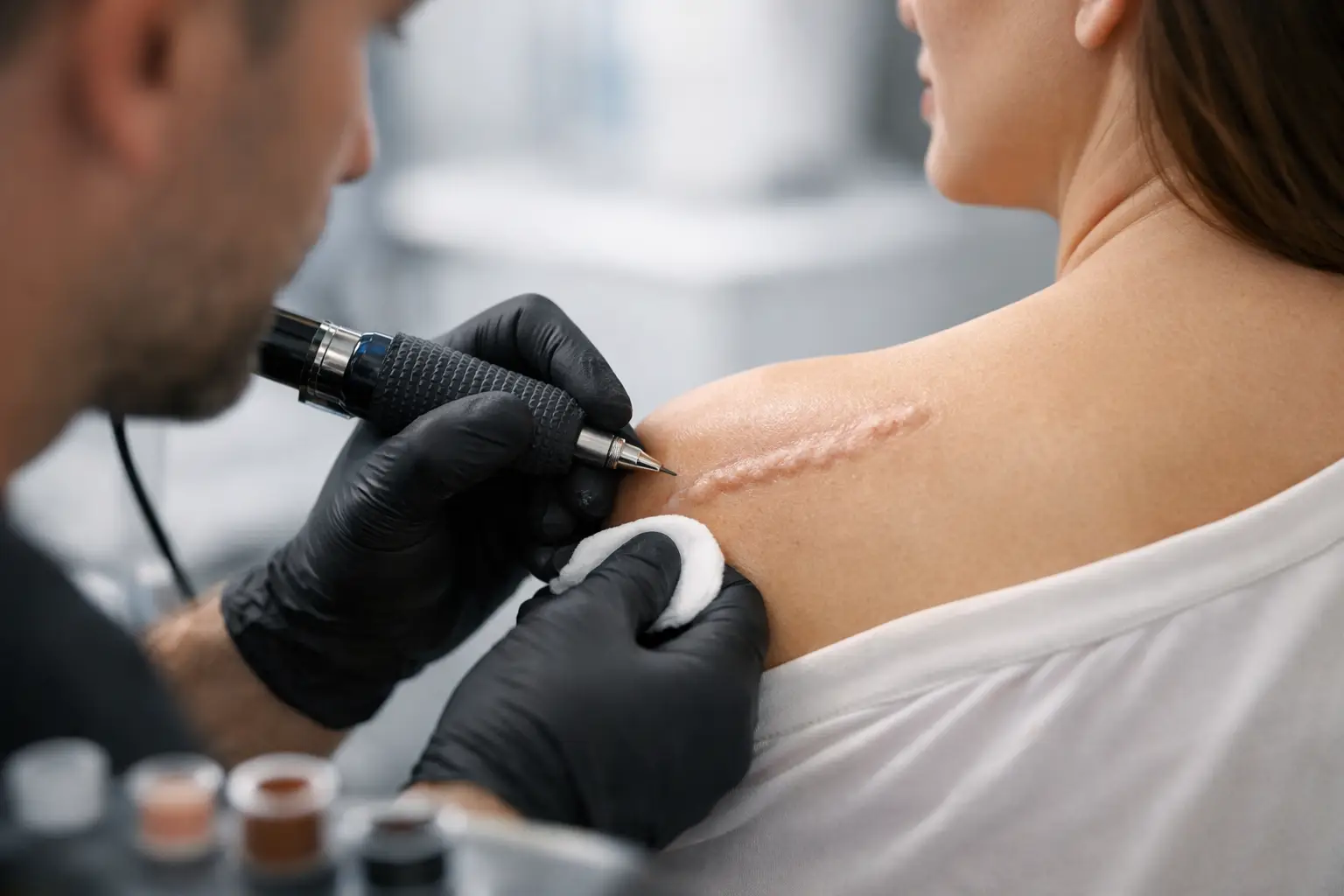
A scar may be fully healed and medically stable, yet still draw attention every time you look in the mirror, wear certain clothes or meet someone new. That is where a specialist consultation matters. How does scar revision tattooing work? It uses carefully selected skin-tone pigments and advanced implantation techniques to reduce the contrast between a scar and the surrounding skin, helping it appear less visible rather than attempting to erase it.
This is not ordinary body art and it is not a one-size-fits-all cosmetic treatment. Successful scar camouflage relies on understanding scar tissue, undertones, skin behaviour and healing. The goal is discreet restoration: bringing colour balance back to an area so it no longer dominates the way you see your body.
How does scar revision tattooing work in practice?
Scar revision tattooing, often called scar camouflage tattooing or medical cosmetic tattooing, deposits bespoke pigment into the upper layers of the skin. A practitioner assesses the unaffected skin around the scar, then creates a custom blend that accounts for surface colour, warmth, coolness, depth and changes likely to occur as the pigment heals.
The pigment is implanted gradually using specialist equipment and needle configurations. Rather than placing a flat block of colour over the scar, an experienced practitioner builds coverage with controlled layering and, where appropriate, subtle tonal variation. This helps the treated area sit more naturally beside the surrounding skin.
The treatment is particularly useful for scars that are lighter than the client’s natural skin tone, which can include surgical scars, accident scars, burn scars and some self-harm scars. It can also support the appearance of stable stretch marks and areas of pigment loss. For clients following breast surgery, areola reconstruction may use related paramedical tattooing principles, but the design and technique are tailored to that highly individual treatment area.
Camouflage tattooing does not remove scar tissue, flatten a raised scar or restore normal skin texture. It changes how noticeable the area looks by reducing colour contrast. That distinction is central to realistic expectations and professional treatment planning.
The assessment comes before the pigment
A specialist will first establish whether the scar is suitable. Scar tissue needs to be fully healed, stable and mature before camouflage is considered. In many cases, that means waiting at least 12 months after surgery or injury, although some scars need longer. A scar that is still red, inflamed, changing in shape, itchy or actively healing is not ready for pigment implantation.
During consultation, the practitioner considers the scar’s age, texture, thickness, location and movement, as well as the client’s skin tone and medical history. Scars can behave unpredictably because their blood supply, collagen structure and pigment retention differ from healthy skin. A raised, tight or highly textured scar may need a different strategy from a flat, pale surgical line.
This assessment may identify that another treatment should come first. For example, MCA inkless needling or radiofrequency microneedling may be considered when the priority is improving texture and collagen quality. For a scar with excess redness, ongoing dermatological management may be more appropriate before any tattooing takes place. Skin restoration is not about forcing every concern into one procedure. It is about choosing the treatment sequence that gives the skin the best chance of responding well.
Colour matching is a technical process
Matching skin colour is more complex than selecting a beige pigment from a bottle. Natural skin contains multiple undertones, and these can vary across the body. The colour on a shoulder will not necessarily match the colour on the abdomen, chest or inner arm. Seasonal tanning, hormonal changes and the scar’s own undertone also affect the final plan.
A practitioner may blend several pigments and adjust the formula across sessions. Freshly implanted pigment often appears stronger or warmer before healing, then settles as the skin recovers. Scar tissue can retain pigment unevenly, so a test area may be recommended, particularly on deeper skin tones or challenging scar tissue. This cautious approach is not a lack of confidence. It is the professional way to gather evidence from that individual skin before progressing.
What happens during a scar camouflage appointment?
On treatment day, the skin is cleansed and the planned shade is checked again in natural-looking light. The practitioner works methodically, implanting pigment in small passes rather than overworking the scar. Comfort levels differ depending on the scar’s location and sensitivity. Some scars have reduced sensation; others remain more sensitive than the surrounding skin.
The appointment length depends on the size and complexity of the area. A small surgical scar may be treated relatively quickly, while a larger area of scarring or stretch marks requires more time, precision and sometimes separate appointments. The skin may look red immediately afterwards and the pigment can appear more pronounced during the first stage of healing.
Aftercare protects the investment in the result. Clients are normally asked to keep the area clean, avoid friction, swimming, saunas, intense exercise and sun exposure for the recommended period. Picking, exfoliating or applying unapproved products can interfere with healing and pigment retention. Once healed, daily sun protection is particularly valuable because tanning can increase contrast between the surrounding skin and the camouflaged area.
Why more than one session is often needed
Scar camouflage is usually a staged treatment, not a single appointment promise. Most clients need at least two sessions, spaced to allow complete healing and accurate colour evaluation. The first session shows how the scar accepts pigment. The next session allows the practitioner to refine coverage, adjust the tone and work on any areas where retention was lighter than expected.
Some scars hold colour exceptionally well; others need further work. This depends on scar density, age, location, circulation, skin type, lifestyle and aftercare. A specialist should be transparent about this from the beginning. The strongest results come from measured progress, not from trying to achieve maximum saturation in one session.
Results also evolve beyond the initial healing period. Camouflage pigment may soften over time, and occasional colour boosts can be needed. Weight changes, sun exposure, hormonal shifts and natural changes in skin tone can all affect how closely the treated skin matches its surroundings.
Who may not be suitable straight away?
Safety must lead every scar revision plan. Treatment may need to be delayed or avoided where there is active infection, an unstable skin condition, a tendency to form keloid scars, uncontrolled diabetes, recent surgery, pregnancy or breastfeeding, or medical factors that affect healing. Certain medications and treatments can also change risk and recovery.
A responsible clinic will ask detailed health questions and, where required, request medical clearance. This is especially relevant after cancer treatment, reconstructive surgery or significant trauma. No reputable practitioner should camouflage a scar simply because a client is ready emotionally. The skin and wider health picture must be ready too.
It is also worth separating camouflage from scar removal. Clients looking for a smoother scar may benefit from a combined plan, beginning with treatments intended to support texture before colour correction. Those with dark, hyperpigmented scars may need a different approach entirely, as adding skin-tone pigment can be unsuitable or may not address the underlying concern.
Choosing a scar revision tattoo specialist
The quality of the outcome rests heavily on practitioner expertise. Scar camouflage requires more than tattooing ability. It demands knowledge of skin anatomy, pigment theory, wound healing, infection control, contraindications and the behaviour of different scar types across all skin tones.
Ask to see healed work, not only immediately after photographs. Look for results that are believable rather than over-edited, and for practitioners who explain limitations as clearly as benefits. A thorough consultation, bespoke pigment plan and appropriate aftercare are signs that the treatment is being handled as paramedical work, not as a quick cosmetic fix.
At Ink Illusions, scar revision is approached through advanced paramedical tattooing principles informed by techniques refined across the UK, Brazil and the USA. Each plan is built around the client’s skin, scar history and desired level of improvement, because confidence-restoring results are achieved through precision, patience and honest clinical judgement.
The most meaningful change is often not that a scar disappears, but that it stops being the first thing you notice. When the scar is stable, the pigment is carefully matched and the treatment is delivered in stages, scar revision tattooing can help the skin feel more balanced and the person wearing it feel more at ease.

