


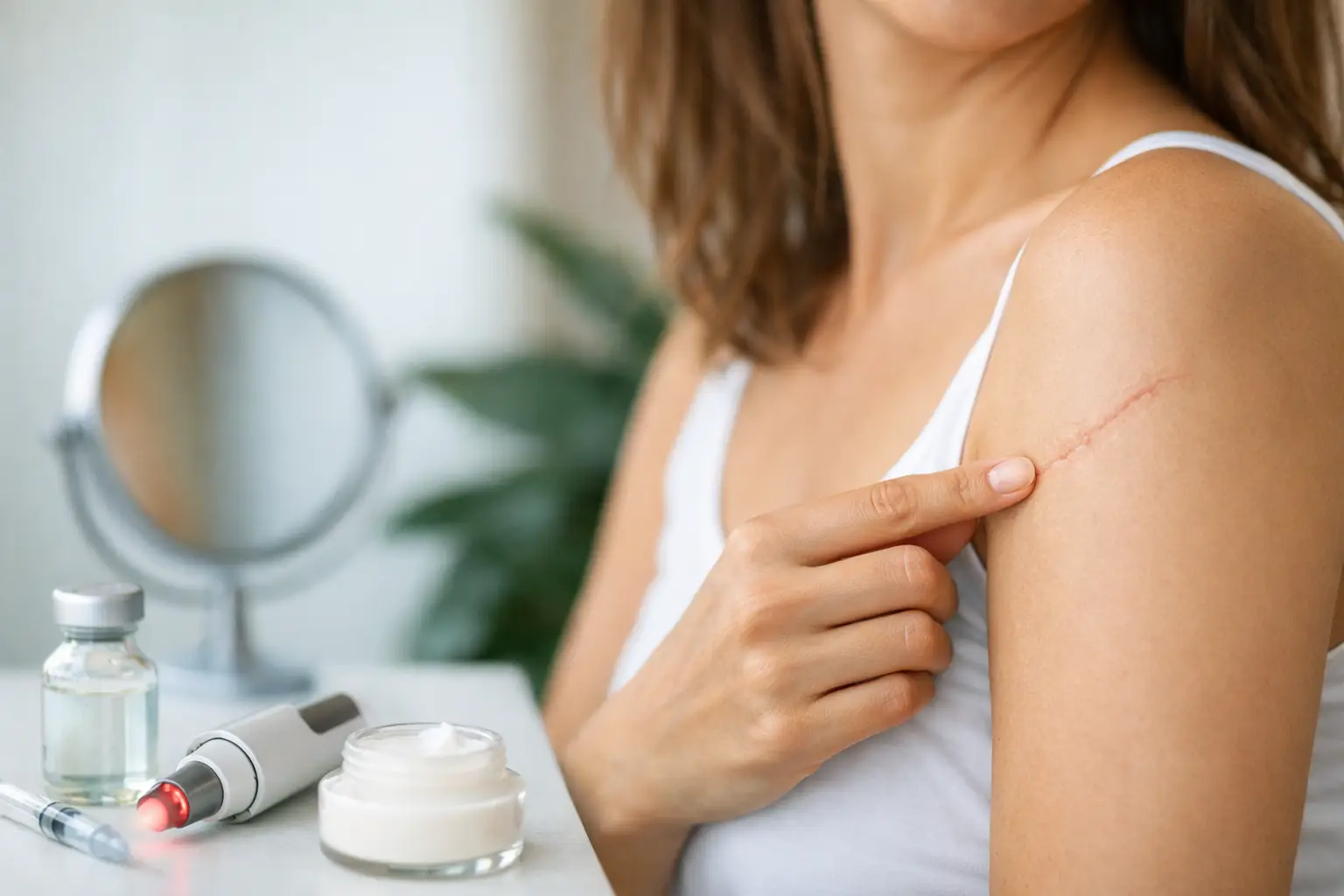
A scar can be physically healed yet still feel impossible to ignore. It may be raised, pale, darker than the surrounding skin, indented, tight, textured or simply placed where it catches your eye every day. Scar revision is not one single treatment or a promise to erase a scar. It is a specialist process of assessing what the scar needs, then choosing the method most likely to reduce contrast, improve texture or restore a more natural-looking skin tone.
For many clients, the goal is not perfection. It is being able to wear what they want, look in the mirror without fixating on one area, or stop feeling that a surgery, injury or difficult chapter is the first thing other people see. That requires a realistic plan, advanced technique and a practitioner who understands how scar tissue behaves across different skin tones.
What scar revision can realistically change
The word revision is often associated with surgical scar revision, where a surgeon may alter the placement, direction or width of a scar. This can be appropriate for certain scars, particularly where function is affected or where the scar has widened significantly. However, many visible scars benefit from non-surgical paramedical treatments designed to improve how the area looks and feels without creating another surgical wound.
The right approach depends on whether the main issue is texture, colour, shape or a combination of all three. A depressed acne scar needs a different strategy from a pale surgical line. A raised burn scar, a C-section scar and self-harm scarring each present different considerations. Treating every scar with the same device or pigment is not specialist scar work.
A successful treatment plan may aim to soften uneven texture, stimulate collagen activity, reduce the contrast between scar tissue and surrounding skin, or use carefully customised pigment to visually blend the area. In many cases, staged treatment produces the strongest result. Texture may be addressed first, then colour correction considered once the skin has settled.
Scar revision begins with the scar itself
A detailed consultation should establish the scar’s age, origin, stability and condition. Mature scars are generally the safest candidates for camouflage work because the tissue and colour have had time to settle. While healing varies, scars are often assessed for camouflage from around 12 months after they formed. Some require longer, especially after major surgery, burns, trauma or complications with healing.
The practitioner will look at whether the tissue is flat, raised or indented; whether it remains red, purple, brown, white or uneven in pigment; and whether there is sensitivity, itching or tightness. The surrounding skin tone matters just as much. Scar camouflage is not about choosing a beige pigment from a chart. It involves bespoke colour theory, undertone recognition and an understanding of how pigment heals within altered tissue.
Medical history also matters. Active skin infection, unstable keloid scarring, certain medications, poor wound healing, pregnancy or breastfeeding, uncontrolled diabetes and active inflammatory skin conditions may mean treatment should be delayed or may not be suitable. A responsible practitioner will never treat a scar merely because it is visible. Suitability comes first.
Raised, hypertrophic and keloid scars
Raised scars need careful assessment. Hypertrophic scars stay within the original wound boundary but can become thick, firm and discoloured. Keloid scars grow beyond the original wound and can continue to change over time. Neither should be treated casually with tattooing or aggressive needling.
Where a scar is active, growing, painful or unstable, medical input is required before cosmetic treatment is considered. Camouflage may be possible only when a scar is fully stable and cleared as appropriate. The objective is always to avoid triggering further inflammation or worsening the tissue response.
Indented and tethered scars
Indented scars, including some surgical scars, acne scars and trauma scars, can create shadowing that makes them appear more noticeable. Pigment alone cannot lift a depression in the skin. Treatments such as MCA inkless needling or radiofrequency microneedling may be considered to support collagen remodelling and improve the appearance of texture, depending on the scar and skin condition.
When a scar is tethered beneath the skin, it may need medical or surgical assessment before cosmetic work. This is why before-and-after photographs alone are never enough to determine your treatment. The scar must be seen and assessed in person.
The main non-surgical treatment options
Medical camouflage tattooing
Scar camouflage tattooing, also known as skin tone restoration, uses specialist pigments to reduce the visual difference between healed scar tissue and the surrounding skin. It is particularly effective for stable, flat scars that are lighter, darker or missing pigment after surgery, burns, injury or previous skin trauma.
The method requires more than applying colour directly into a line. Scar tissue can retain pigment differently from unscarred skin, and its final healed shade cannot be judged on the day of treatment. A specialist creates a tailored pigment blend, considers undertones and builds colour gradually. Sessions are normally spaced apart to allow full healing and accurate colour review.
Camouflage creates an optical improvement, not a change to the scar’s physical structure. If a scar is deeply indented or highly textured, blending the colour may still help, but combining camouflage with texture-focused treatment can be more appropriate.
MCA inkless needling
MCA inkless needling is a specialist skin repair method used to create controlled microchannels without implanting pigment. The treatment is intended to encourage the skin’s natural repair response and may improve the appearance of selected stretch marks and scars over a course of sessions.
It is not a quick fix, and results depend on the age, depth and condition of the scar, alongside individual healing response. The skin needs time between appointments to remodel. For the right candidate, it can improve texture and make subsequent camouflage work more refined.
Radiofrequency microneedling and skin remodelling
Radiofrequency microneedling combines fine needles with controlled radiofrequency energy to target deeper layers of the skin. It may be suited to certain textural concerns where collagen stimulation is a priority. The treatment can be valuable for scars that are indented or uneven, but it must be selected with care, particularly on highly reactive skin or unstable scar tissue.
This is a different treatment from camouflage tattooing. One works primarily on structure; the other works primarily on visual colour integration. Knowing when to use one, the other or both is where specialist clinical judgement makes a visible difference.
Pigmentation correction
Some scars remain noticeably pale because they lack melanin, while others heal darker due to post-inflammatory hyperpigmentation. Pigmentation treatments may support a more even appearance where appropriate, but they are not interchangeable with tattoo camouflage. A pale scar may require colour restoration; an over-pigmented area may first need a conservative skin-correction approach.
The treatment route must account for skin tone, sun exposure, hormonal factors and the risk of post-inflammatory pigment change. Rushing into strong treatments can create more contrast rather than less.
Why specialist technique matters
Paramedical scar work sits between aesthetic artistry and advanced skin knowledge. The practitioner needs to understand scar maturation, pigment behaviour, sterile technique, needle depth, healing patterns and colour matching on every Fitzpatrick skin type. A result that looks convincing immediately after treatment can heal too warm, too cool, too light or too dense if this knowledge is missing.
At Ink Illusions, the approach draws on Brazilian, UK and US skin restoration techniques, with treatment selection based on the individual scar rather than a one-size-fits-all protocol. This matters especially for clients who have been told their skin tone is difficult to match, or whose scar has not responded as expected to general beauty treatments.
For practitioners, this is also why regulated, hands-on education is essential. Scar revision services involve real skin concerns, meaningful client expectations and high standards of consultation, consent, hygiene and aftercare. A machine and a pigment set do not create a paramedical specialist. Training, supervised practice and the ability to decline unsuitable cases do.
What to expect from the treatment journey
A proper journey starts with consultation, photographs and a clear discussion of what can realistically improve. Your practitioner should explain the expected number of sessions, costs, healing periods, patch testing where relevant, aftercare and the possibility that a result may need adjustment once healed.
Aftercare protects the result. Depending on the treatment, this may involve keeping the area clean and dry for a specified period, avoiding friction, swimming, heat, sun exposure and active skincare until the skin has recovered. Picking, scratching or applying unapproved products can interfere with healing and pigment retention.
Results develop over time. Needling and radiofrequency treatments rely on gradual skin remodelling, while camouflage tattooing needs a full healing cycle before the true shade can be reviewed. Patience is part of the process, not a drawback.
The most valuable outcome is often subtle: the scar stops dominating the area around it. When treatment is well chosen and expertly performed, it can help your skin feel more like your own again.