


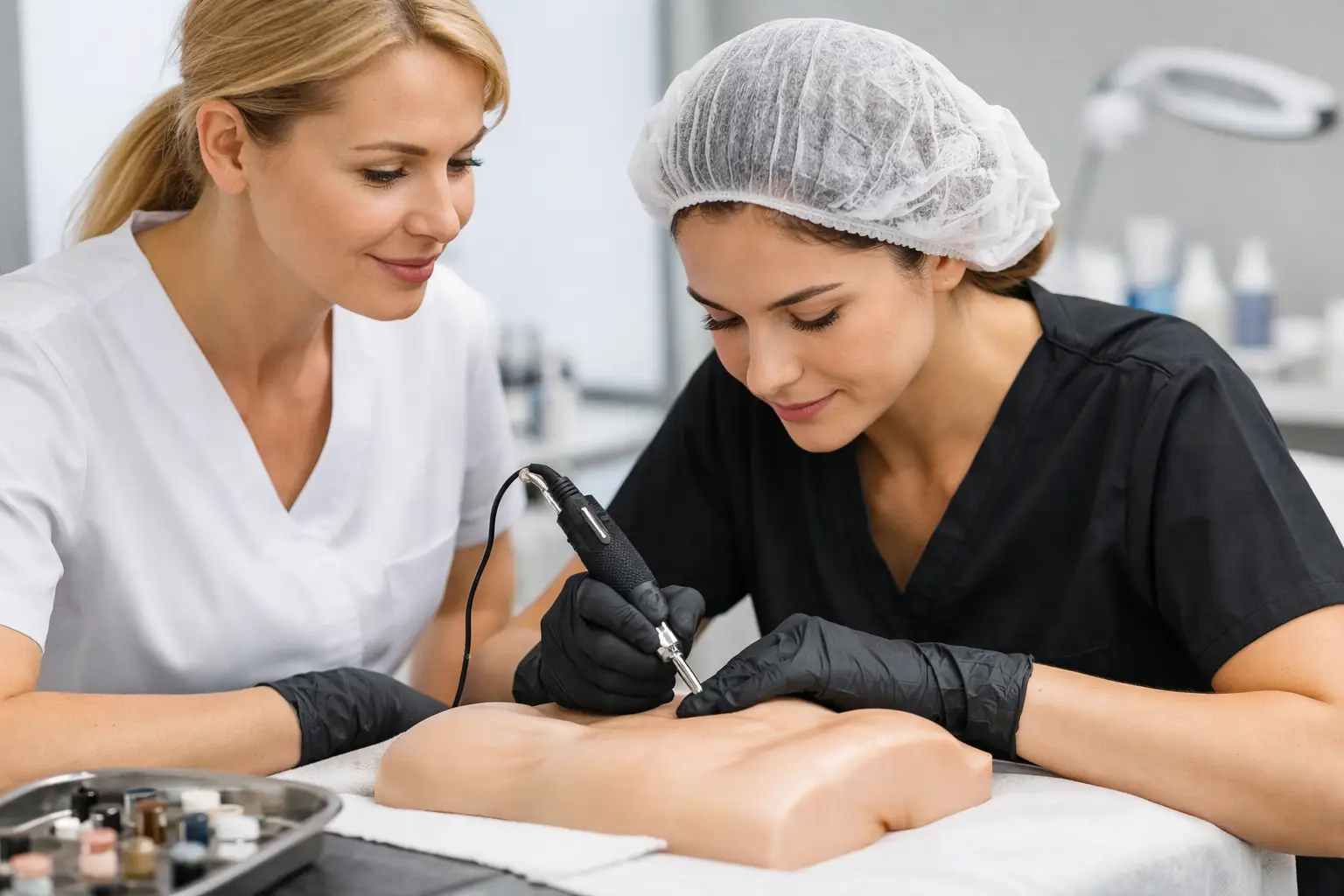
A scar is not a blank canvas, and neither are stretch marks, burns, surgical marks or areas of pigment loss. That distinction should shape every decision you make when considering how to choose paramedical tattoo training. The right course does more than teach you how to implant pigment. It equips you to assess healed skin responsibly, select suitable cases, manage expectations and deliver work that can genuinely restore confidence.
Paramedical tattooing is a specialist field. Clients may arrive after surgery, childbirth, trauma, mastectomy, injury or years of feeling self-conscious about a visible concern. They deserve a practitioner with technical ability, sound judgement and a treatment system built around safety. Training is therefore an investment in clinical-minded practice, not simply another service to add to a menu.
Start with the treatment specialism
“Paramedical tattoo training” can cover a broad range of treatments. Before comparing academies, establish exactly what you want to be qualified and confident to offer. Scar camouflage, stretch mark camouflage, areola restoration, vitiligo camouflage, burn scar work and scalp micropigmentation all require related but distinct knowledge.
A course that teaches scar camouflage as a short add-on may not provide sufficient depth for complex scar tissue, textural change, post-inflammatory hyperpigmentation or challenging skin-tone matching. Similarly, stretch mark camouflage is not simply a colour-matching procedure. It demands an understanding of skin maturity, pigment dilution, needle selection, pressure, saturation and the visual effect of surrounding skin.
Look for training that names the treatments clearly and explains the boundaries of each technique. If your goal is to work with stretch marks, ask whether the programme includes Brazilian-style camouflage methods, realistic colour theory across varied skin tones and practical work on the different types of striae. If areola reconstruction is your interest, ensure the curriculum addresses three-dimensional effects, post-surgical suitability and sensitive client consultations.
Specialism matters because broad training can be useful, but it should never create false confidence. A practitioner who understands when not to treat is as valuable as one who can produce a convincing result.
How to choose paramedical tattoo training with credible standards
Credentials alone do not guarantee quality, but they reveal how seriously an academy approaches professional education. Check whether the course is CPD certified, whether it leads to an OFQUAL regulated qualification where stated, and what those terms mean in practice. Ask for clarity on the awarding body, qualification level, assessment process and evidence you must submit to complete the training.
A regulated pathway is particularly valuable for practitioners building a long-term career, seeking insurance, or working towards local authority licensing requirements. However, the best choice depends on your current background. An experienced tattoo artist may need a programme that concentrates on skin assessment and paramedical application, while a PMU artist may require more intensive tattoo-machine technique. A complete beginner should be cautious about courses that promise advanced medical camouflage skills in only a day or two.
The academy should also be transparent about prerequisites. Some courses are designed for qualified PMU artists, tattooists, SMP practitioners or aesthetics professionals. Others offer foundation routes. Entry requirements are not a barrier for their own sake – they protect clients and help ensure you can absorb the technical content safely.
Check who teaches the course
Look beyond the academy logo and ask who will actually be in the room. A strong educator should be an active practitioner with a substantial portfolio of healed work, not only fresh treatment photographs. Fresh pigment can look precise and well-blended; healed results show whether colour selection, placement and technique were correct over time.
Review the educator’s experience across skin tones, scar types and treatment areas. Do they understand the difference between stable, mature scar tissue and skin that is still inflamed or changing? Can they explain why certain scars are unsuitable for pigment implantation? Do they show evidence of work that has healed naturally, rather than relying on filtered images or only one type of client?
At Ink Illusions, our approach to education reflects methods developed across Brazil, the USA and the UK, with an emphasis on practical skin restoration rather than one-size-fits-all techniques. That international perspective matters because skin behaviour, pigment systems and client needs do not fit neatly into a single method.
Practical training must be more than a demonstration
Watching an expert perform a treatment is useful. Performing the procedure yourself under close supervision is where professional capability begins. Ask how much hands-on practice the course includes, whether live models are provided, and what ratio of students to educators is maintained.
Training on latex or synthetic skins has a place, particularly for machine control and pigment handling. It cannot fully replicate the resistance, irregularity, sensitivity and colour variation of healed human skin. For advanced scar and stretch mark camouflage, live-model experience is a major indicator of course quality.
You should also find out what happens if you need additional support. Is there a case-study requirement? Can you submit healed work for feedback? Is mentoring available after the classroom element? The first months after training often raise the most important questions: whether a scar is mature enough, why pigment has healed cooler than expected, or how to respond when a client’s expectations exceed what camouflage can deliver.
A course with post-training support can help you turn education into a safe service rather than a certificate that sits unused.
Assess the curriculum for skin science and safety
Paramedical tattooing sits at the intersection of cosmetic tattooing, colour theory and skin repair. A credible curriculum should cover far more than needle movement. Expect detailed teaching on skin anatomy, wound healing, scar maturation, contraindications, informed consent, patch testing, infection prevention, cross-contamination and aftercare.
It should also address the consultation process. Clients may be understandably emotional about their scars or skin changes, so consultation needs to be compassionate without making promises that cannot be guaranteed. Camouflage reduces contrast and visibility. It does not erase texture, remove a scar or make altered skin identical to untouched skin.
The best training teaches you to recognise referral situations. Active skin conditions, keloid tendencies, unstable pigmentation, recent surgery, medical uncertainty and poorly healed tissue may require a delay, medical clearance or a decision not to proceed. This judgement protects both the client and your reputation.
Demand serious colour theory
Colour matching is one of the most technically demanding parts of paramedical work. Skin undertones shift between facial and body areas, can change with tanning and may heal differently through scar tissue. A single “skin tone” pigment range is rarely enough.
Ask whether the course teaches custom mixing, undertone analysis, dilution, modifiers, healed colour prediction and colour correction. It should explain why the same pigment can appear differently on a pale surgical scar, deeper Fitzpatrick skin type or sun-exposed stretch marks. Training must be inclusive by design, with practical knowledge that serves clients across the full spectrum of skin tones.
Product knowledge matters here too. Find out which pigments, serums and aftercare products are used, why they are selected, and whether you are being taught a considered protocol rather than a quick formula. Quality products support consistency, but they cannot replace assessment and technique.
Compare the business support, not just the course fee
The cheapest course can become expensive if it leaves you unable to treat safely, source suitable products or attract the right clients. Compare what is included: starter kit, machine guidance, pigments, treatment protocols, consultation documents, consent forms, insurance advice, portfolio development and ongoing mentorship.
Do not choose on price alone, but do ask direct questions about the total investment. You may need to budget for insurance, licensing, equipment, clinical hygiene supplies, quality pigments, a treatment bed, marketing photography and model costs. A reputable academy will discuss these realities openly rather than presenting paramedical tattooing as effortless income.
Business guidance is especially useful when it is grounded in ethical positioning. This is a premium, trust-led service. Your marketing should show healed outcomes, explain realistic treatment aims and speak respectfully to clients with personal histories. Avoid before-and-after images that exaggerate results or make emotional pressure part of the sales process.
Questions to ask before you enrol
Before paying a deposit, request clear answers to the following:
- Is the course suitable for my existing qualifications and experience?
- What qualification or certification will I receive, and who regulates or certifies it?
- How many live models will I work on, if any?
- Will I receive feedback on healed case studies?
- Does the training cover varied skin tones, scar types and contraindications?
- What post-course mentoring, product support and insurance guidance are available?
Pay attention to the quality of the response. A professional academy will welcome informed questions. Vague claims about being “fully qualified” without assessment details, pressure to book immediately, or promises of guaranteed client results should prompt caution.
The training you choose will influence every consultation you conduct and every client who trusts you with skin that carries a story. Choose a programme that values safety, healed results and honest transformation, then give yourself the time to practise until your work reflects that standard.