


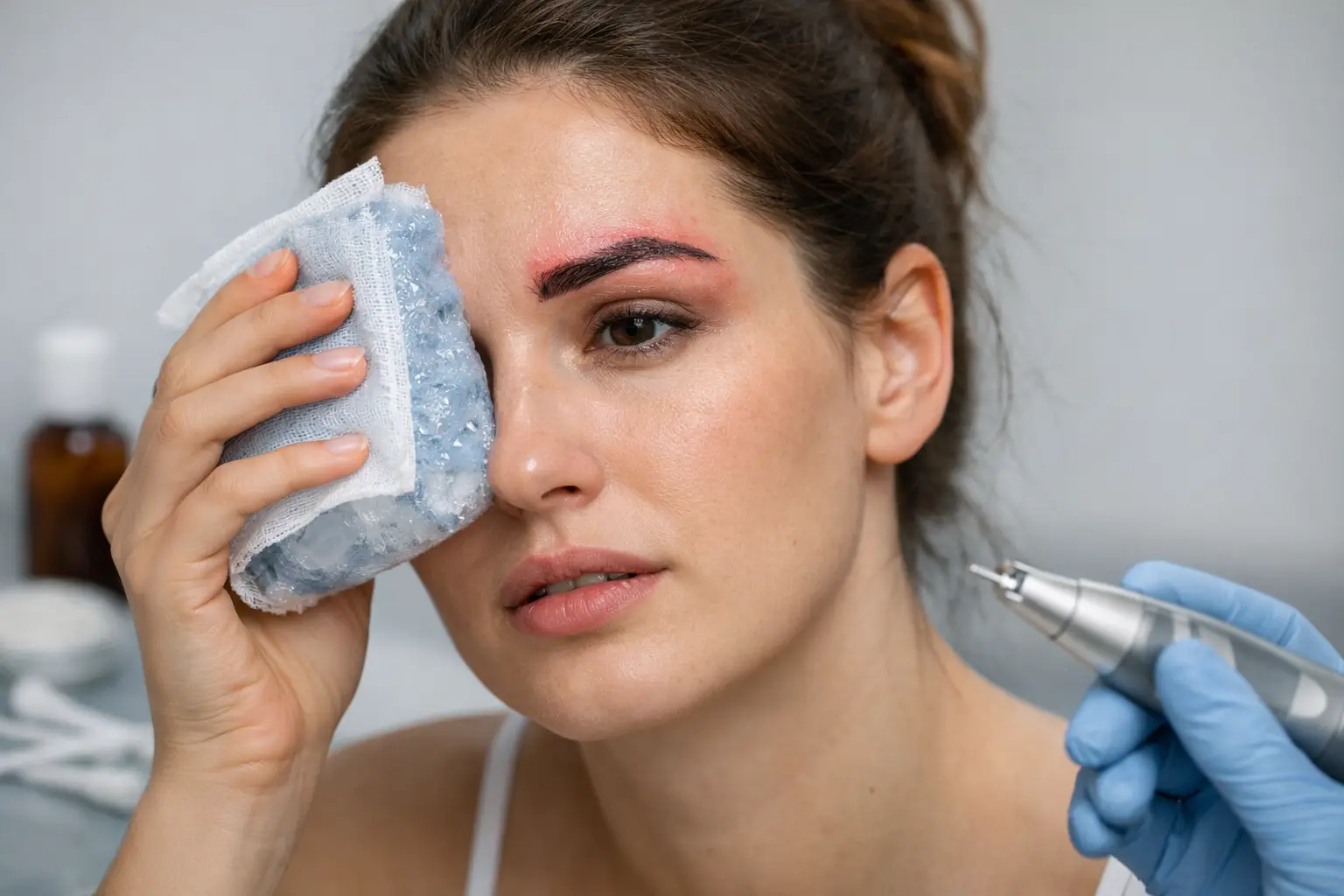
A semi-permanent makeup appointment should leave you feeling more confident, not urgently searching for emergency PMU removal. Yet brows can occasionally heal darker than expected, sit outside the agreed shape, appear uneven, or simply feel completely wrong the moment you see them. When pigment has been implanted very recently, there may be a short opportunity for a specialist to assess whether emergency removal is appropriate.
This is not a home correction, a quick fix, or a guarantee that every trace of pigment can be removed in one appointment. It is a time-sensitive professional procedure designed to reduce fresh unwanted pigment while protecting the skin, supporting safe healing and preserving the best possible options for future correction.
Why the first 48 hours matter
Fresh PMU pigment has not yet settled and stabilised in the skin in the same way as healed pigment. In suitable cases, a trained removal practitioner may be able to use a specialist saline-based removal method to encourage pigment out of the skin during the early healing phase.
Timing matters, but urgency should never replace proper assessment. A rushed treatment performed on unsuitable skin, by an untrained provider, can increase trauma, prolong healing and make later correction more complex. The aim is not to panic-remove. The aim is to make an informed clinical-style decision as early as possible.
Emergency removal is most commonly requested after eyebrow PMU, including powder brows, ombré brows, microblading and combination brows. It may also be considered for lip blush or other cosmetic tattooing, although the area, technique used, pigment depth and condition of the skin all affect suitability.
When emergency PMU removal may be appropriate
The strongest candidates are usually clients who are within approximately 24 to 48 hours of their original treatment and are unhappy because of a clear issue rather than normal post-treatment swelling or colour intensity. Brows often look bolder, warmer, darker and more defined immediately after treatment. That alone is not always a reason to remove them.
A specialist assessment may be appropriate where the shape is substantially outside the intended design, there is obvious asymmetry beyond what swelling can explain, the colour choice is markedly unsuitable, or pigment has been placed where it was not agreed. Your practitioner will need to understand exactly when the PMU was performed, what technique and pigment were used, whether numbing products were applied, and how your skin has reacted so far.
Clear photographs taken before, immediately after and the following day can be useful. They help distinguish a genuine design concern from normal inflammation, temporary redness or the visual intensity of fresh pigment.
There are circumstances in which emergency removal should be delayed or avoided. These can include broken or excessively inflamed skin, signs of infection, an active cold sore around a lip treatment, certain medical conditions, impaired healing, or a history of problematic scarring. A detailed consultation is essential, particularly for clients with deeper skin tones or skin prone to hyperpigmentation, where every treatment decision should be made with long-term skin response in mind.
What happens during an emergency removal appointment
A reputable practitioner begins with assessment, not action. They will review the treated area, your treatment history, your health information and your expectations. They should also explain that fresh-pigment removal is an attempt to reduce and lift pigment, not a promise of complete erasure.
Where the treatment is suitable, a professional may carefully work over the implanted area using a removal solution and controlled technique. The approach is designed to support the extraction of unwanted pigment while respecting the skin barrier. Treatment must be tailored to the original PMU method, the density of pigment, the area being treated and the skin’s immediate condition.
The area may look red, feel tender and develop small scabs as it heals. This is expected after a skin-breaking procedure, but excessive pain, spreading redness, heat, swelling, discharge or feeling unwell are not normal healing signs. Seek prompt medical advice if these occur. If you experience eye pain, visual changes or significant swelling after eyebrow treatment, seek urgent medical care.
For fresh brows, the visual result can change significantly over the following days and weeks. Some pigment may lift well; some may remain; and some colour can appear different as the skin repairs. A responsible practitioner will not judge the final outcome on day one.
Emergency removal is not the same as laser removal
Laser tattoo removal is often used for established tattoo pigment, including healed cosmetic tattooing in selected cases. It works by targeting pigment with light energy, and it is usually planned as a course of treatments with appropriate intervals for healing.
Emergency saline-based removal serves a different purpose. It is used in the very early stage after PMU where a practitioner is assessing whether fresh pigment can be reduced before it fully settles. The two treatments are not interchangeable, and the right route depends on timing, pigment formulation, location, skin type and the desired correction.
This distinction matters for eyebrow work in particular. Some PMU pigments can shift in colour when treated with laser, while others respond more predictably. A practitioner experienced in both removal planning and colour correction can explain the trade-offs rather than offering a one-size-fits-all answer.
What not to do when you regret fresh PMU
The period after an unwanted PMU treatment can feel emotional, especially when the face is involved. Avoid making the situation harder to correct by trying to force pigment out at home. Do not scrub, exfoliate, pick, use acids, apply salt pastes, put peroxide on the area or repeatedly wash it in the hope that the colour will fade.
These methods can create unnecessary inflammation and increase the risk of scarring, infection and uneven pigment retention. They may also remove colour unpredictably, leaving patchiness that requires more complex correction later.
Avoid booking another brow artist immediately to tattoo over the concern. Adding pigment before the original work has healed can compound shape, colour and saturation problems. A good corrective plan begins with restraint: assess the issue, allow the skin to tell the truth as it heals, then choose removal, correction or camouflage at the right stage.
Aftercare determines part of the outcome
After emergency treatment, follow the individual aftercare plan given by your practitioner. In most cases, this means keeping the area clean, avoiding touching it unnecessarily, allowing scabs to shed naturally and protecting the healing skin from sweat, swimming, steam rooms, sun exposure and cosmetics for the advised period.
Do not judge the result too quickly. The skin needs time to repair, and colour can look stronger, lighter or uneven before it settles. Follow-up assessment is where a specialist can decide whether further removal is needed, whether a later colour correction is possible, or whether the best option is simply to let the area heal completely.
At Ink Illusions, emergency concerns are considered through the same specialist lens used for advanced skin restoration and paramedical tattooing: skin integrity first, pigment behaviour second, and an outcome that supports confidence over the long term.
Choosing the right practitioner for a time-sensitive correction
Look for a practitioner who can explain the difference between emergency removal, healed-pigment removal and colour correction. They should ask informed questions about your treatment, be open about limitations and prioritise safe healing over dramatic promises.
Experience across skin tones is equally important. Pigment removal and skin trauma can affect every client differently, and a practitioner must understand the potential for post-inflammatory hyperpigmentation, hypopigmentation and altered scar response. The most impressive before-and-after photograph is never more valuable than a careful assessment and a responsible treatment plan.
If your PMU feels wrong, act promptly but calmly. Take clear photographs, contact a qualified specialist as soon as possible, and protect the treated area while you wait for advice. The best next step is the one that gives your skin the greatest chance to heal well and gives you the widest range of correction options afterwards.