


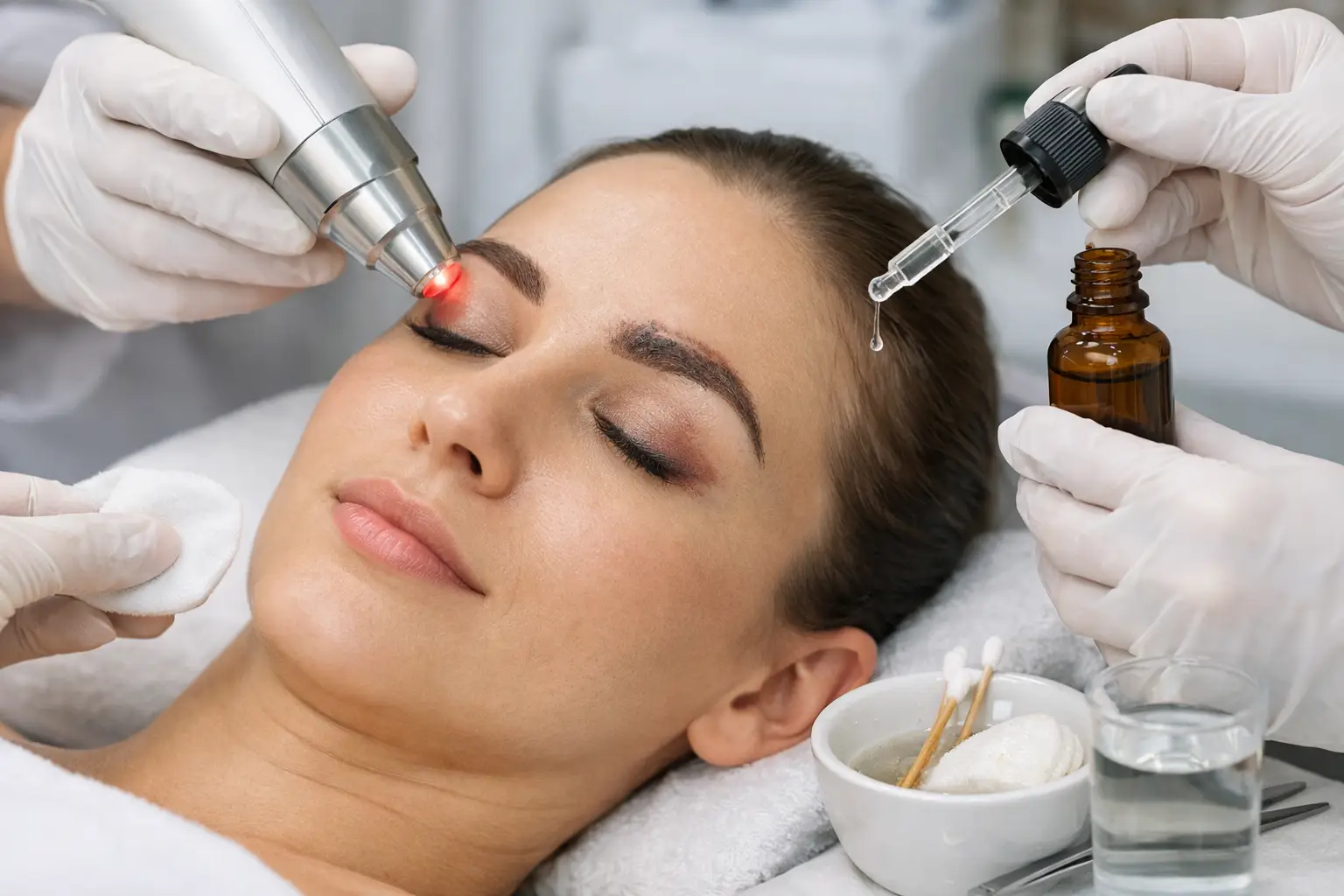
A fresh PMU result can feel alarming when the shape is wrong, the pigment appears far darker than expected, or colour has been placed outside the intended design. In that moment, searching for the best PMU emergency removal methods is understandable. The priority, however, is not to react with home remedies or repeated treatments. It is to protect the skin, establish what has happened and act within the appropriate clinical window.
Emergency removal is a specialist procedure, not a standard beauty correction. It requires an informed assessment of the implantation depth, pigment type, area treated, skin condition and the time since the original procedure. Brows, lips and eyeliner each present different risks, and a method that may be appropriate for a fresh eyebrow treatment may be unsuitable around the delicate eye area.
When PMU removal is genuinely an emergency
Not every fresh result needs removal. Permanent make-up commonly looks sharper, darker and more saturated in the first few days because of swelling, oxidation, surface pigment and the normal healing response. A brow that appears overly bold on day one may soften substantially once the skin has healed.
An emergency assessment is more appropriate where there is clear pigment migration, a significant shape error, unwanted placement beyond the mapped design, severe asymmetry, or pigment that is visibly too dark or unsuitable for the client’s skin tone. It may also be considered when a technician has worked too deeply and the client wishes to reduce the amount of pigment retained before healing progresses.
There is a separate category of urgent concern: a possible adverse reaction or infection. Increasing heat, spreading redness, pronounced swelling, pus, fever, severe pain, breathing difficulty or swelling affecting the eyes or lips needs prompt medical assessment. Emergency removal is not a substitute for medical care. A skilled PMU removal practitioner should know when to stop, refer and prioritise the client’s wellbeing.
Best PMU emergency removal methods: what specialists consider
The right option depends on the treatment area and how recently the pigment was implanted. No responsible practitioner should promise that one session will completely erase fresh PMU. The realistic aim is often to lift or reduce as much pigment as safely possible, then allow the skin to recover before deciding whether further removal, correction or camouflage is appropriate.
Professional saline emergency removal
Saline removal is one of the most recognised approaches for fresh PMU, particularly for eyebrows. Performed by a properly trained practitioner, it uses a controlled technique to encourage pigment to be drawn towards the skin’s surface as the area heals. It is not the same as applying salt water to the skin, rubbing the area or attempting to open the skin at home.
Timing matters. The method is usually considered in the very early stage after implantation, but the exact treatment window depends on the protocol used, the skin’s presentation and the practitioner’s assessment. Freshly treated skin is already compromised, so excessive passes, aggressive pressure or repeated intervention can increase trauma and raise the risk of scarring or uneven healing.
Saline emergency removal can be valuable where there is unwanted placement or pigment saturation, but it has limitations. It may not remove all colour evenly, especially if pigment has been placed at varying depths. Results also depend on the original pigment formula, the client’s skin and aftercare compliance.
Specialist removal solutions
Some qualified PMU removal practitioners use purpose-designed removal solutions within a structured emergency removal protocol. These products are selected and applied according to professional training, manufacturer guidance and the client’s suitability. They should never be confused with acidic DIY products, online peel solutions or tattoo removal creams.
A specialist solution may assist with pigment lifting in appropriate cases, yet it carries the same core principle as saline treatment: less trauma is better. A practitioner must work conservatively, monitor the skin carefully and be honest where the safest choice is to allow healing before further treatment.
This approach is not automatically suitable for every area. Eyeliner requires exceptional caution because of its proximity to the eye, while lips have a high vascular supply and can swell dramatically. Any history of cold sores, allergies, previous scarring or impaired healing must be considered before treatment.
Controlled correction rather than full removal
Sometimes the best emergency decision is targeted correction. If the issue is a small tail placed too low, an uneven outline or a minor area of migration, a specialist may focus only on reducing the offending section rather than attempting to remove the entire brow or lip treatment.
This is often a more skin-conscious approach. It preserves the option of a later correction once the tissue has fully recovered, instead of creating widespread inflammation in an effort to fix an immediately distressing result. Good emergency work is precise, not aggressive.
Laser tattoo removal after healing
Laser removal has an important place in the management of unwanted permanent make-up, but it is rarely the immediate answer for freshly implanted PMU. The skin needs time to settle and heal before laser is considered. Treating inflamed, broken or recently tattooed skin can cause unnecessary trauma and compromise recovery.
Laser suitability also depends heavily on pigment composition. Some cosmetic pigments can darken or change colour when exposed to laser energy, particularly formulas containing ingredients that may oxidise. A thorough consultation, test patch where appropriate and a practitioner experienced in cosmetic tattoo pigments are essential. Laser can be highly effective in the right setting, but it is not a universal quick fix.
What to avoid after a PMU mistake
Panic can lead clients towards methods that cause more visible damage than the original PMU. Do not scrub, pick, exfoliate, use hydrogen peroxide, apply acids, use retinoids, place salt directly onto the skin or attempt to needle the area yourself. These actions can drive inflammation, disrupt healing and create scars that are far more difficult to treat than unwanted pigment.
Avoid covering the area with more pigment immediately. Colour correction should only be considered once the original work has settled and the skin has recovered. Attempting to neutralise a dark, poorly shaped or migrated result too soon can compound the problem and leave the client with a more complex removal journey.
It is also wise to avoid advice based solely on photographs. Images can help a practitioner triage urgency, but pigment depth, tissue response and skin integrity cannot be fully assessed through a screen. A face-to-face specialist assessment provides a safer basis for treatment.
The consultation matters as much as the removal technique
A high-standard emergency PMU consultation begins with facts. The practitioner should ask when the treatment was performed, which area was treated, what pigment and machine or blade technique were used, whether numbing products were applied and whether there is any history of keloid scarring, autoimmune conditions, medication changes or previous reactions.
They should examine the skin for swelling, bleeding, excessive trauma and signs that a medical referral is needed. They should also explain the likely outcome in realistic terms. Pigment may fade unevenly. More than one treatment may be required. A healed correction may be safer and more aesthetically successful than forcing complete removal in one urgent appointment.
At Ink Illusions, emergency PMU removal is approached with the same specialist judgement used across advanced skin restoration work: protect the integrity of the skin first, then create the clearest possible pathway towards a corrected result.
For practitioners: emergency removal is a training issue
For PMU artists, offering emergency removal without dedicated education is not a responsible extension of brow or lip services. It requires knowledge of pigment behaviour, skin physiology, contraindications, infection control, wound healing and referral boundaries. Practitioners must also understand that an emotional client may be seeking certainty at a time when certainty is not clinically possible.
Clear documentation is essential. Record the client’s presentation, timing, products used, treatment settings or method, consent, aftercare and photographs where consent has been given. Explain what the treatment can and cannot achieve, and never minimise the possibility of incomplete removal, temporary colour change or the need for later sessions.
The strongest emergency PMU practitioners are not those who promise instant erasure. They are the professionals who recognise the limits of the skin, make careful decisions under pressure and help clients move from shock to a safe, considered correction plan.